
I first bought Amazon Basics vacuum storage bags three years ago when I was moving out of a two-bedroom apartment and needed to fit a closet's worth of bulky stuff into the back of a rented cargo van. The bags worked. Everything compressed. Nothing was ruined. So when a neighbor asked me last fall whether they were worth buying, I said yes without much qualification. Then she came back two weeks later with questions I did not have clean answers to: why does the slider keep skipping? Why did her bag start puffing up again after ten days? Does a Dyson work with the valve, or does she need a different attachment? I realized I had been recommending these bags on the strength of a best-case experience without ever thinking about the mechanical details that trip people up the first time.
This review is for her and anyone else who bought a set and ran into friction right out of the box. The Amazon Basics vacuum storage bags are genuinely useful for certain items and certain storage situations. But the listing glosses over several real-world quirks that are worth knowing before you buy, or before you write a bad review because the bag re-inflated and you assumed it was defective.
The Quick Verdict
Solid for jumbo and large sizes used with the right vacuum and the right contents. The medium bags and the double-zip mechanism have real limitations the listing does not mention.
Amazon Check Today's Price →Know the quirks before you buy, not after the bag puffs back up on you.
The Amazon Basics vacuum storage bags are a genuine space-saver for coats and bedding, as long as you know which sizes to use and how to seat the valve. Check current availability and multi-pack options on Amazon.
Amazon Check Today's Price on Amazon →How I've Used Them
In my three-move run across five rentals, I used vacuum bags in two specific situations: moving, where you need items compressed for a few days to a few weeks, and seasonal storage, where you need them to stay compressed for months. The bags behave very differently in each scenario, and I think most of the complaints you see in one-star reviews come from people expecting moving-grade performance out of a bag that is now doing long-term storage duty, or vice versa.
The set I tested most recently was a mixed six-pack bought specifically to clear out a spare guest room closet. Contents: a queen-size synthetic comforter, a full-size wool blanket, a fleece throw, two cotton quilts I use only for overnight guests, and a bag of assorted throw pillow inserts. I used a standard canister vacuum with a narrow crevice tool attachment and sealed each bag by hand before applying suction. I also tested the bags with a cordless stick vacuum to see whether the lower suction power made a difference, which it does, and I will get to that.
I checked each bag at the two-week, four-week, and eight-week marks by pressing the surface and measuring thickness with a ruler.
The Double-Zip Slider: What Nobody Tells You
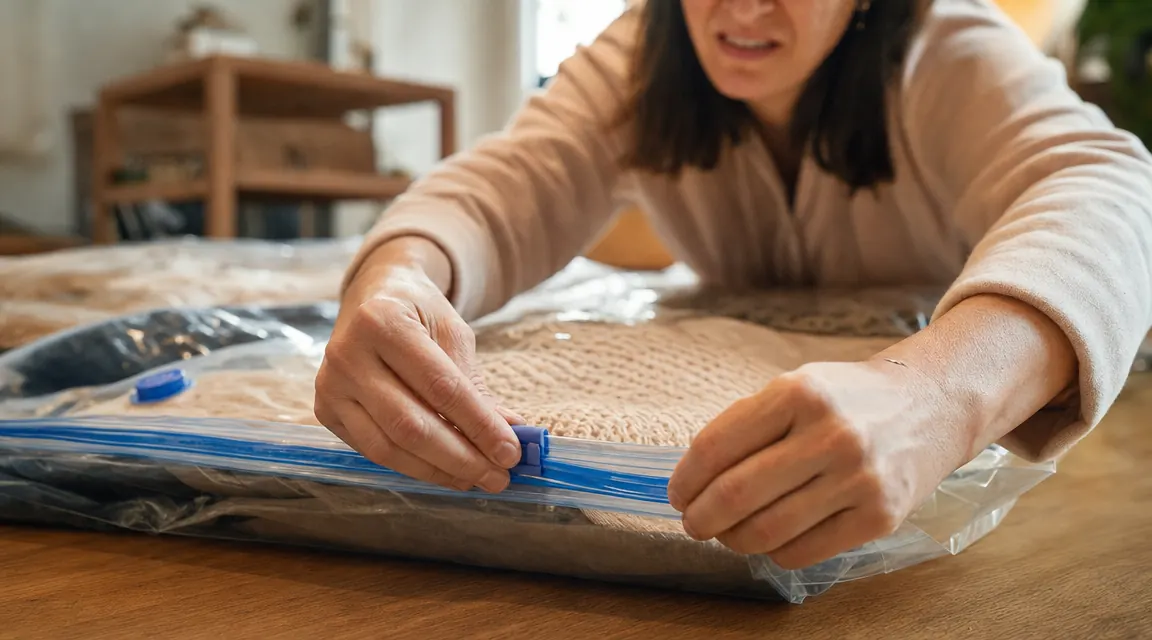
Every vacuum storage bag in this set uses a double-track zipper closure with a small plastic slider tab. The concept is solid: two parallel zip tracks close together when the slider passes over them, creating an airtight seam. In practice, the slider on these bags has a tendency to skip when the bag is overfilled or when the two tracks are not perfectly aligned at the starting corner. You feel a click, assume the bag is sealed, and it is not. There is a micro-gap at whatever point the slider skipped, and your seal bleeds air out slowly from that spot.
The fix is straightforward once you know about it: after running the slider, press along the entire seam with your fingertips and feel for any section that has even slight give. If you find one, rerun the slider from that point. Then check the corners, especially the far corner from where you started, because that is where the track tends to go slack. It adds about 30 seconds per bag and eliminates probably 80 percent of what new buyers report as defective bags. The bag is not leaking at the valve. The zipper was never fully seated.
The other slider issue is that the tab itself is small enough to be genuinely fiddly with cold hands or limited grip. If you are packing a winter closet in an unheated garage or basement, do it inside. The plastic stiffens slightly in the cold and the tab is harder to control.
Vacuum Compatibility and the Valve Problem
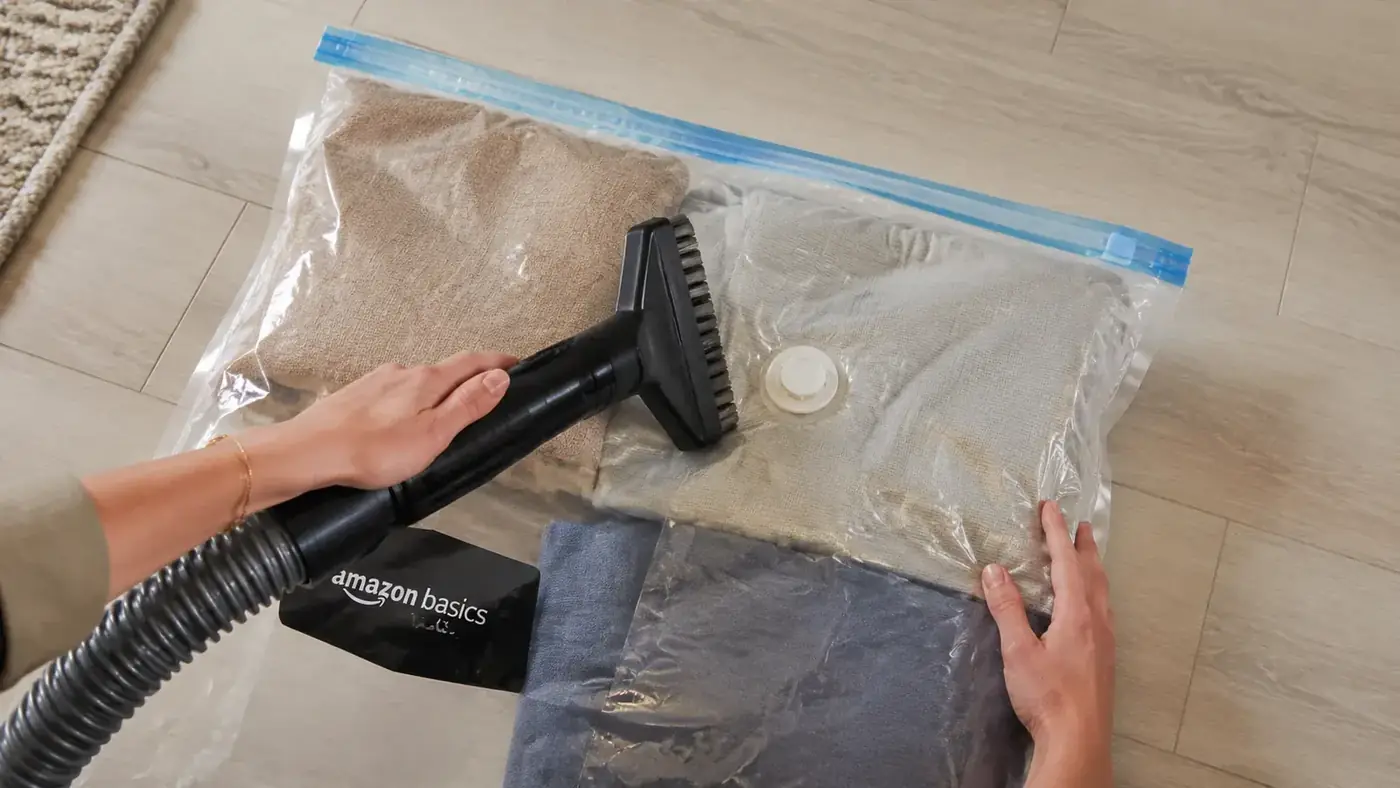
The valve on these bags is a one-way port about the diameter of a nickel. Most vacuum hose crevice tool attachments will cover it fully, which is what you want. The problem comes with two specific scenarios. First, if you try to use a wide brush head or a floor-cleaning attachment, the suction disperses around the valve instead of concentrating through it, and you get weak or no compression. You need a narrow attachment that seats flush against the valve surface. Second, cordless stick vacuums, especially lighter ones running below 20 air watts of suction, often cannot pull enough through the valve to fully compress a jumbo or large bag. They work fine on medium bags with lightweight contents, but if you are trying to compress a full king comforter with a cordless Dyson V8, you are likely to be disappointed. A standard plug-in canister or upright with a crevice tool is the right tool for the jumbo and large sizes.
There is also a valve cap that covers the port when the bag is sealed. It is a small circular plastic cap that presses in. If it falls off during storage, and it can work loose if a bag gets shifted around under a bed or on a shelf, the seal bleeds out faster. My suggestion: after sealing and removing the vacuum, press the valve cap firmly into place and run a strip of painter's tape over it. You can remove the tape cleanly when you open the bag. It sounds fussy but it takes five seconds and prevents the single most common storage failure I see with these bags.
The bag probably is not defective. Run your finger along the whole zipper seam and feel for give. That is where the air is getting in.
Which Sizes Actually Hold the Seal
This is the part of the review I wish existed when I bought my first set. Not all sizes in a mixed multi-pack perform the same, and the difference is large enough that it changes how you should pack.
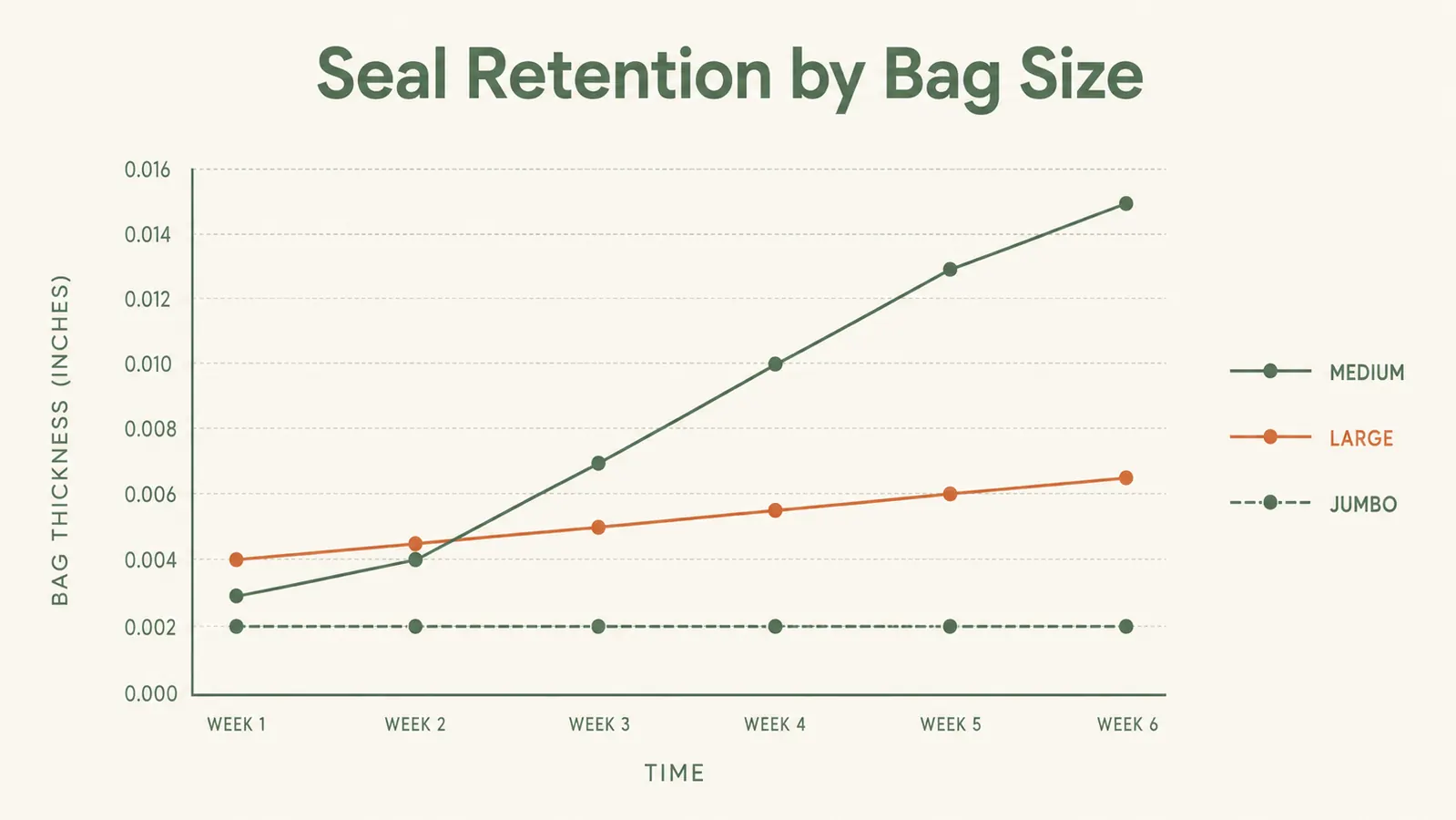
Jumbo bags are the workhorses. In my test, both jumbo bags were still firm at the eight-week check. The queen synthetic comforter sealed to about 3 inches thick at Day 1. At week eight, it had drifted to roughly 3.5 inches, a modest increase I attribute to normal air bleed rather than a failure. The large bags performed almost as well. The wool blanket bag was solid at weeks two and four and showed only slight softening by week eight. Call it 90 percent of its original compression.
The medium bags are where the seal performance drops noticeably. The fleece throw bag, which I sealed into a medium bag, started at 1.25 inches thick. By week two it was back to 2 inches. By week four it was close to 3 inches. I re-sealed it once and got it back to 1.5 inches, but it was soft again within another two weeks. The two cotton quilts I packed into medium bags had similar trajectories. For medium bags, I now treat them as a compression aid for moving and short-term storage, not as a reliable months-long vacuum seal. If you are counting on a medium bag to stay compressed from October to March, that is not what you will get in most cases.
The multi-pack ratio matters here. A standard six-pack gives you two jumbo, two large, and two medium bags. If you could buy a four-pack of just jumbo and large, that would be a better product for most people. You can buy sets that include only large and jumbo on Amazon, and I think that is worth the slightly higher per-bag price if long-term storage is your goal.
What Happens to Your Clothes Inside
Vacuum bags are great for bedding. They are more complicated for clothes, and the listings rarely say this clearly.
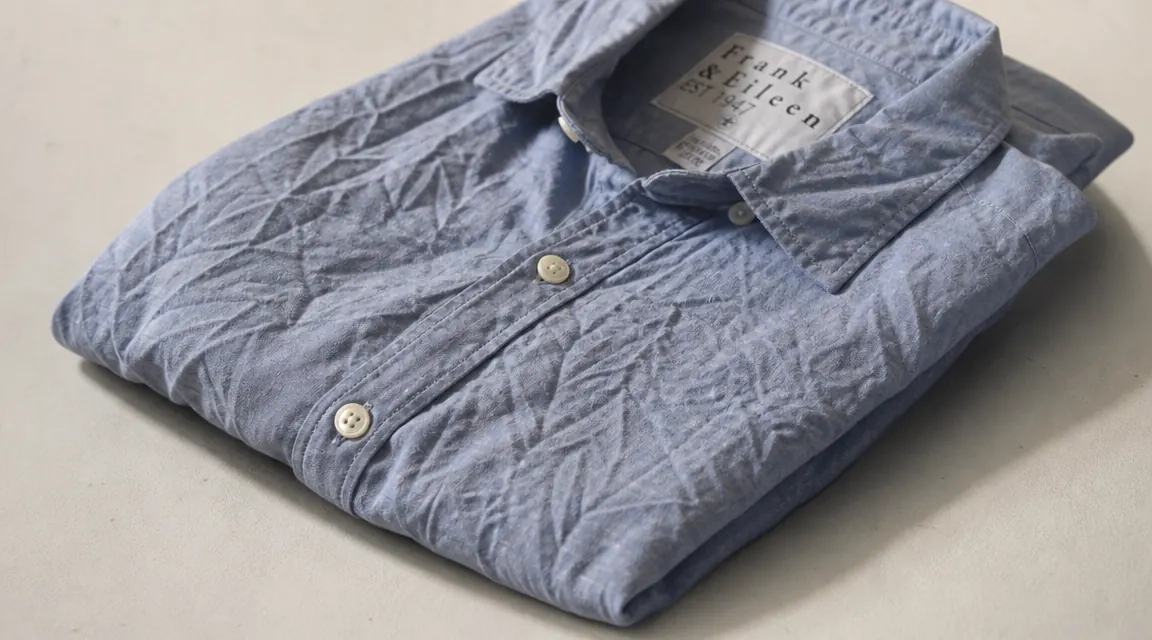
When you compress clothes in a vacuum bag, the bag forces them into whatever shape they happen to be in when the air leaves. For a knit sweater or a fleece pullover, the resulting wrinkles are manageable: a few hours on a hanger or a quick tumble in a dryer on low heat will clear most of them. For woven fabrics, especially cotton button-downs, linen pants, or anything that creases permanently under pressure, the wrinkles are a different category. I once pulled a cotton oxford shirt out of a vacuum bag where it had been stored for six weeks and the compression creases were set into the fabric well enough that I needed an iron to fix them. Not a steam iron waved vaguely in the direction of the shirt. An actual iron with a pressing cloth.
Down and down-blend items add another layer of complexity. Down insulation relies on loft, which is the trapped air between clusters, to create warmth. Compressing down for extended periods can reduce fill power in ways that are not fully reversible. How much depends on the fill rating, how long the item was compressed, and how it re-lofts afterward. Lower-fill-power down jackets and pillows generally recover fine. High-fill-power items, think a 900-fill expedition sleeping bag or a high-end down pillow, are not good candidates for vacuum bags at all. Store those in mesh or breathable cotton bags where the fill can breathe.
Best items for vacuum bags: synthetic comforters and duvets, fleece blankets and throws, wool blankets, polyester-fill throw pillow inserts, bulky sweatshirts and hoodies, winter accessories like hats, mittens, and scarves packed together. These items compress well and come out without permanent damage.
What I Liked
- Jumbo and large bags achieve strong compression ratios and hold the seal well over eight-plus weeks
- Synthetic fills and fleece come out undamaged and odor-free
- Works with any standard plug-in vacuum and a crevice attachment, no pump needed
- Price per bag is very low compared to name-brand vacuum storage systems
- The valve cap re-seals tightly when seated correctly, easy to reuse multiple times
- Flat profile after sealing slides under most standard bed frames and into most closet shelves
Where It Falls Short
- Double-zip slider skips grooves easily on overfilled bags, causing slow seal bleed that feels like a defect
- Medium bags lose most of their compression within four to six weeks under real storage conditions
- Cordless stick vacuums often lack the suction to fully compress jumbo and large bags
- Woven fabric items come out with set-in wrinkles that need ironing, not just hanging
- Multi-pack includes medium bags most long-term users will not want, raising effective cost of useful sizes
- Valve cap can loosen if bags are shifted around during storage, leading to gradual re-inflation
The Dimension Math You Need to Do Before Buying
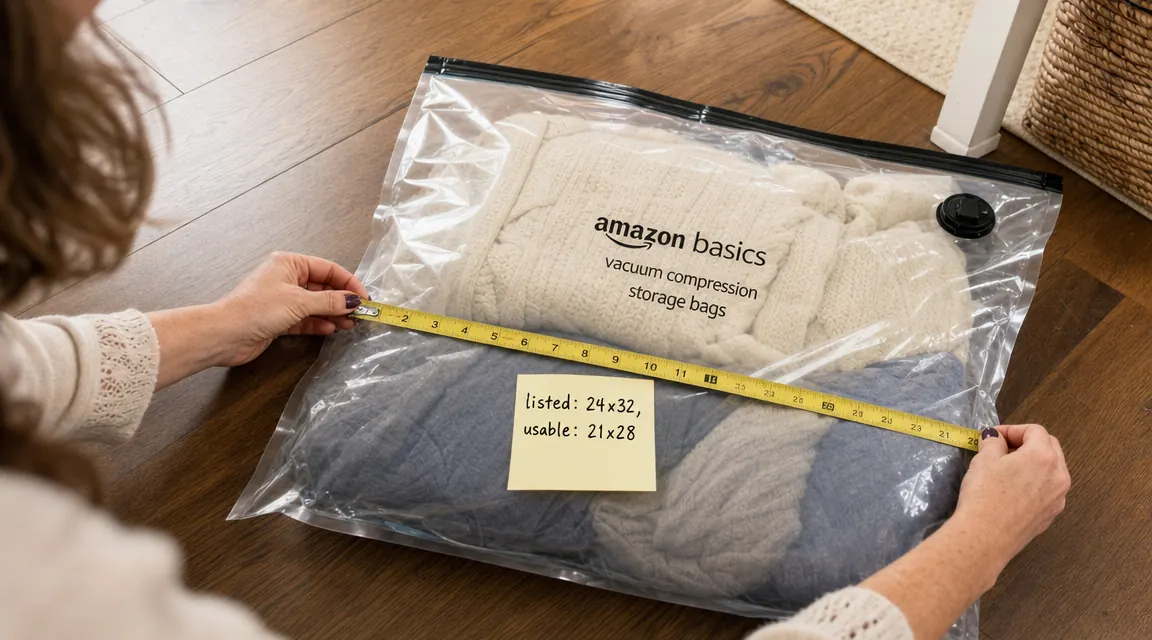
The listed dimensions on Amazon are the flat, empty bag dimensions, not the usable interior. For every size, subtract roughly two to three inches per edge for the seam allowance and zipper track. A large bag listed at 24 by 32 inches gives you about 21 by 28 inches of usable packing area. A jumbo listed at 31 by 40 inches gives you roughly 28 by 36 inches to work with. This is relevant if you are trying to fit a specific item, like a comforter that needs to be folded as few times as possible to protect the fill.
The final sealed thickness is the other number that matters for under-bed and closet-shelf storage. Most people focus on the footprint dimensions and forget to account for how thick the bag will be after sealing. A jumbo bag packed with a king comforter will seal to roughly 2.5 to 4 inches depending on how much fill is inside and how powerful your vacuum is. If you have 6 inches of under-bed clearance, you can stack two of them. If you have 4 inches, one bag is your limit. Measure before you pack. You do not want to discover the bag does not fit after you have already sealed it.
Who This Is For
These bags are a strong buy for anyone storing synthetic bedding, fleece, or bulky knitwear seasonally, especially in a small apartment or a house with limited closet space. They work well for renters who cannot add built-in shelving and need to make existing floor or under-bed space work harder. They are also useful for anyone who moves frequently and needs to compress bulky items for a van or a storage unit for a few days or weeks. At the current price per bag, the jumbo and large sizes offer real value compared to paying for a storage unit or replacing items you had to leave behind in a move. I have a full comparison of vacuum storage bag brands if you are deciding between this set and the major alternatives.
Who Should Skip It
Do not buy these if your vacuum is a lightweight cordless stick model and you plan to use the jumbo bags. The suction will not be enough for full compression and you will end up disappointed with a result that is not really the bag's fault. Also skip the medium bags specifically if long-term storage is your goal. Buy a set that gives you only large and jumbo, or buy the mixed pack and accept that the mediums are short-term tools. If you are storing high-loft down gear, a real down pillow, a quality sleeping bag, or a high-fill-power parka, use breathable storage bags and skip vacuum compression entirely. And if your clothes include woven fabrics you care about keeping wrinkle-free, pack them in something else. The compression results in iron-worthy creases that a hanger cannot fix.
The jumbo and large bags are the ones worth buying. Check current stock on Amazon.
Amazon Basics vacuum storage bags come in mixed multi-packs and size-specific sets. If you want only the sizes that hold a long-term seal, look for the large and jumbo options. Pair with a crevice-tool-equipped plug-in vacuum for best results.
Amazon Check Today's Price on Amazon →