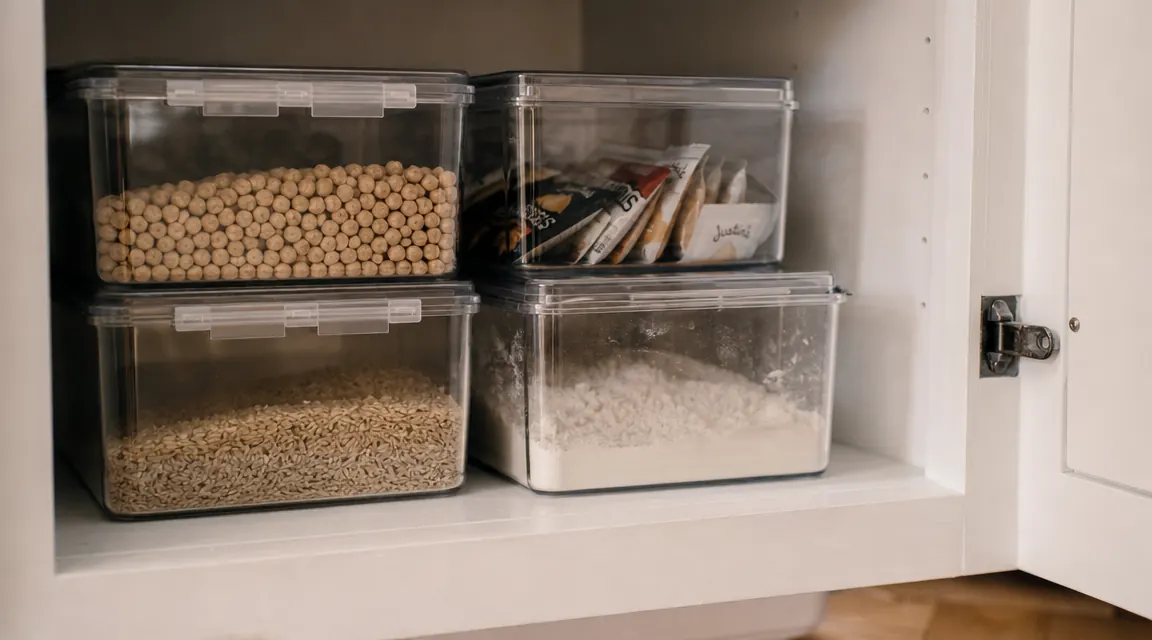
Let me tell you what the listing does not say. The Sterilite 6-quart clear bins have 14,000-plus reviews and a 4.6-star average on Amazon. The photos look clean. The price per bin is hard to argue with. What the listing does not show you is the inside dimension versus the outside dimension gap, the specific way the snap lids fail, the truth about staining, and the one shelf-depth requirement that will wreck your whole plan if you do not measure first. I have bought this product twice, returned a partial order once, and now own 16 of them in three different rooms. That trajectory tells you something.
I'm Dana. I organized my way through five rentals before buying this house, and I have put enough storage products through the wringer to know which complaints are user error and which are genuine product limitations. The Sterilite bins fall into both categories, and sorting out which is which is the whole point of this piece.
The Quick Verdict
Genuinely good value for the right shelf and the right contents, but the listing optimistically describes the exterior dimensions, the lids are not rated for rough daily use, and six quarts is smaller than most people picture.
Amazon Check Today's Price →The catches are real but not deal-breakers if you know them going in
Sterilite 6-quart bins work exceptionally well for specific pantry and cabinet applications. Buy the 12-pack if you are tackling an entire shelf system at once. Check the current price on Amazon before you decide.
Amazon Check Today's Price on Amazon →How I've Used These Bins (and Where Things Got Complicated)
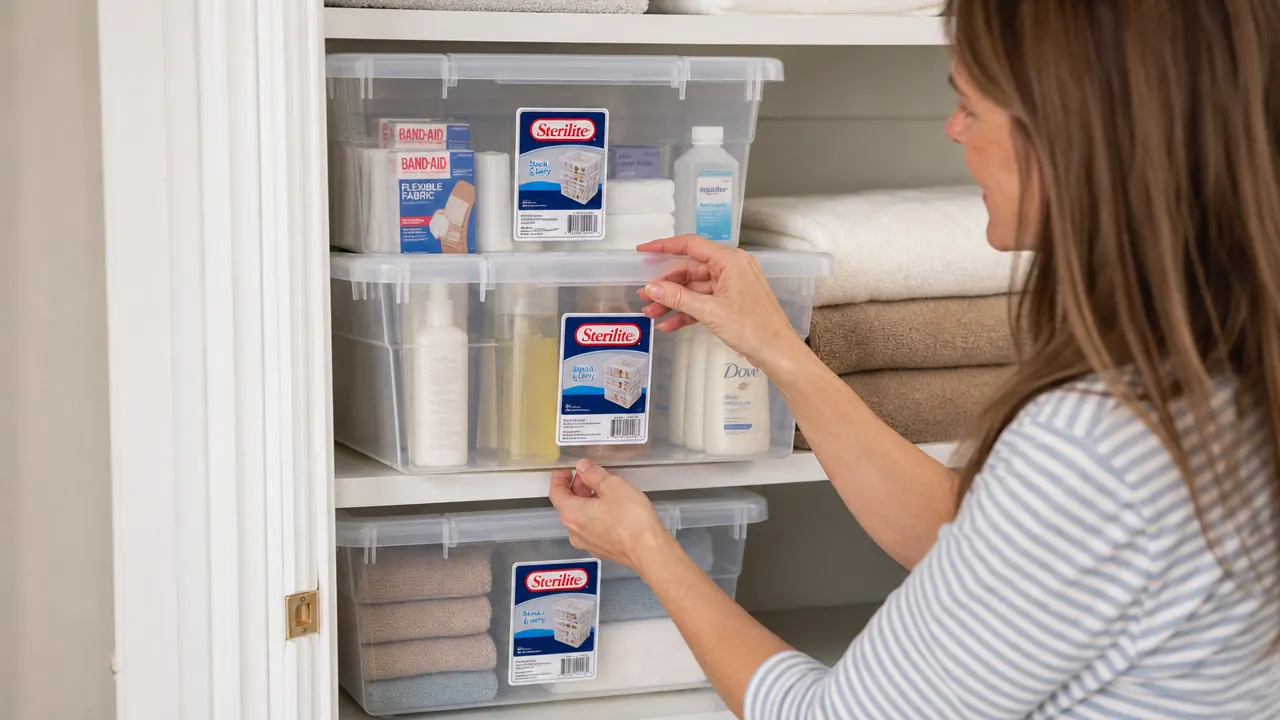
My first order of eight bins went into the linen closet in my bathroom. This is a closet with three shelves, each about 10 inches deep and 18 inches wide, spaced 11 inches apart. The exterior bin height is 4.875 inches, which sounded like a comfortable fit. What I discovered on day one is that 11 inches of shelf clearance minus 4.875 inches of bin height leaves you 6.125 inches of space to reach in, get your fingers under the lid tabs, and pull up. That is not quite enough if your hand is not small. I spent the first two weeks of ownership half-expecting to tip a bin every time I grabbed something from the second shelf. The fix was to leave the top shelf empty and use only the bottom two shelves for bins. Not what I planned, but workable.
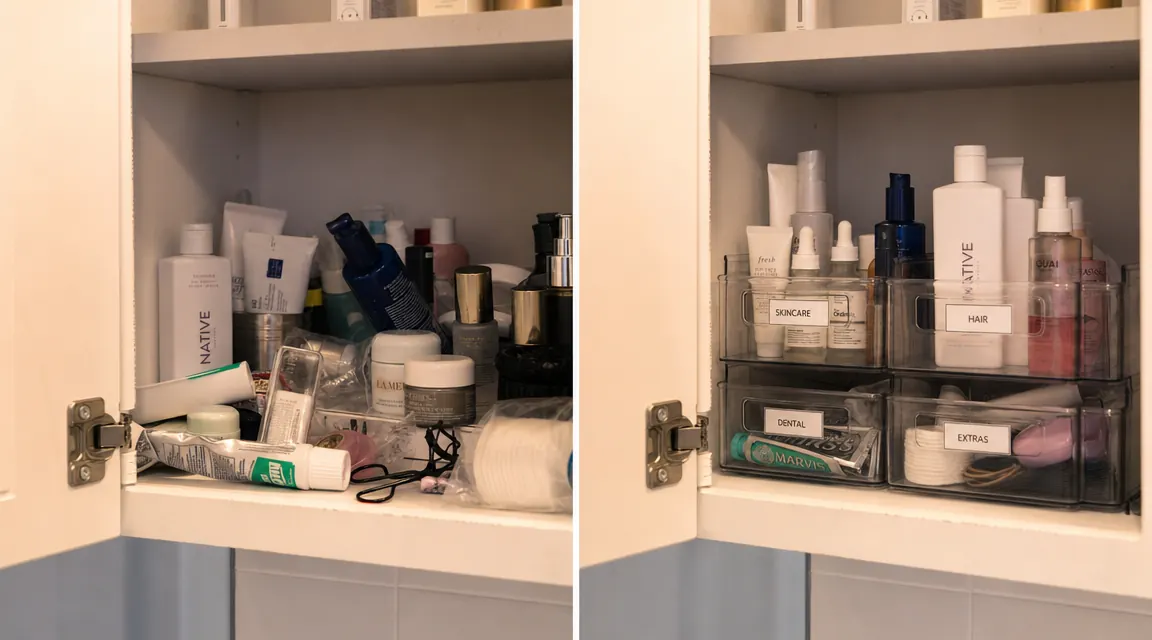
Six months later I ordered eight more for the bathroom vanity cabinet and a corner shelf in the garage. The vanity cabinet application is where these bins shine hardest. I had four bins side by side on a 24-inch shelf holding: everyday makeup, skincare, hair tools I use weekly but not daily, and a miscellaneous bin for things like safety pins and extra earring backs that were previously scattered across every drawer in the bathroom. Everything visible, everything contained, nothing falling over when I open the door. That setup has stayed exactly the way I built it and requires about thirty seconds of maintenance per week.
The garage corner shelf was a different story, and I will get to that in the staining section. The short version: I put things in there that I should not have put in a clear plastic bin, and the bins told me about it immediately.
The Dimension Problem: What '6 Quart' Actually Means in Practice
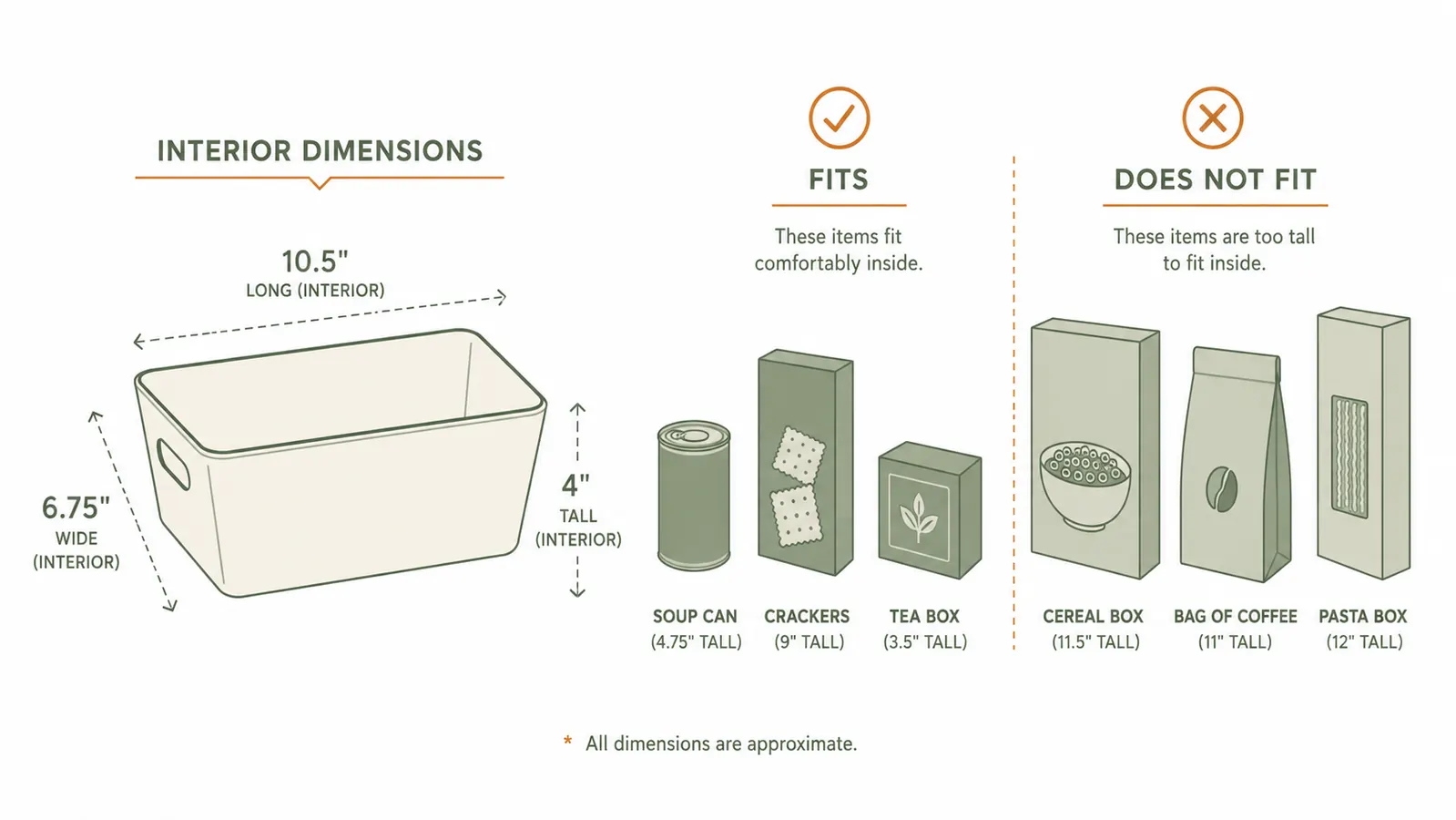
The exterior dimensions on the listing are 11.375 inches long, 7.375 inches wide, and 4.875 inches tall. Those numbers are accurate. What they are not is the interior dimension, and the gap matters more than you might think for a bin this size. The wall thickness and lid structure reduce your usable interior space to roughly 10.5 inches long, 6.75 inches wide, and about 4 inches of true clearance height with the lid on. Six quarts of liquid would fill this bin to the brim. Six quarts of crackers, which is what most people are actually putting in here, gives you a bin that holds about half a standard box of Triscuits and nothing else.
I ran a measurement test when I got suspicious after my first order. I put a standard 13.8-ounce box of Wheat Thins inside, lid closed. It fit. Barely. The box height is 7.5 inches, and the interior bin clearance with lid is just over 4 inches, so the box had to go in on its side. Standing up, a cereal-sized box does not close. If you are expecting to stand any standard grocery box upright inside a 6-quart bin, you will be returning your order. The bins are for loose or already-open items, decanted pantry goods, or things that naturally sit flat and short, like snack pouches, small cans, and condiment packets.
I want to be clear that this is not a flaw in the product. It is a mismatch between what people imagine when they read '6 quart' and what the bin is actually shaped to hold. Six quarts is a volume measure, not a shape guide. If you are building a decant system where you transfer dry goods out of their original packaging, this bin is genuinely ideal. If you want to drop grocery bags directly into a bin and close the lid, you will need to look at a taller format.
The Lid Snap Mechanism: What Actually Breaks and Why
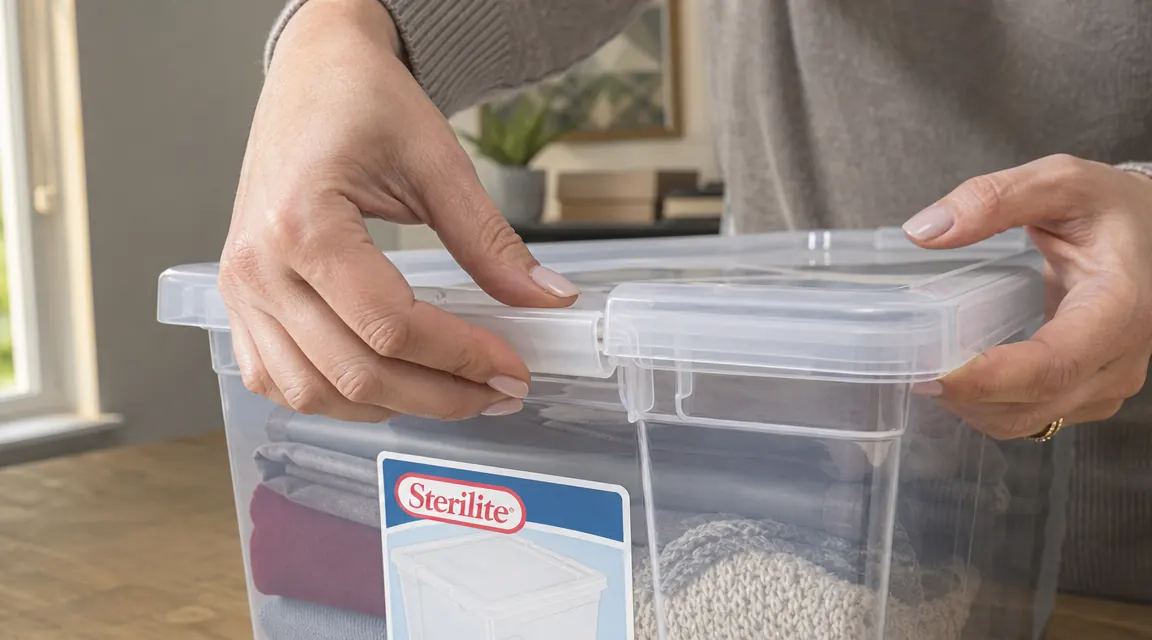
The lids have four snap tabs, one on each side. Each tab has a small finger grip that you press to release. The mechanism works cleanly when the bin is on a shelf at waist height where you have a straight-on approach and two hands free. The mechanism becomes annoying on low shelves or high shelves where you are working at an angle and cannot get a clean press on all four tabs at once. And the mechanism fails outright, eventually, when the tabs are snapped shut and pulled open many times per day.
Out of the 16 bins I own, three lids have developed visible hairline cracks in the tab hinge area. All three are bins located in the linen closet where my two younger kids access the snack overflow shelf. None cracked in the bathroom vanity cabinet or the garage, which I am the only one using. The failure pattern is consistent with plastic fatigue from repeated flex cycles. The tabs are not infinitely reusable. If a bin gets opened six to ten times a day by small hands that are not being careful about the angle of the snap, figure on one or two cracked lids per year.
The workaround I use now: high-traffic kid bins do not use the snap lids at all. I remove the lid and just set it on top. The lid still functions as a dust cover and keeps things from spilling if a bin tips slightly. The snap tabs are still present and still work, I just do not engage them on those bins. This has stopped all lid cracking and removed exactly zero functionality that I actually needed. If you are using these in a kid-accessible spot, consider whether you need the snap in the first place.
The lids are fine. The snap tabs are not. There is a difference, and knowing it before you buy will save you the same frustration I had at month four.
Staining, Scratching, and Clarity Over Time
The plastic stays clear for kitchen and bathroom use. I have bins that have been washed in the top rack of the dishwasher at least once a month for over a year and they look the same as when they arrived. Cloudiness from repeated washing is not a problem I have encountered. Scratching from normal loading and unloading is minimal, a few faint marks on the interior walls where I have put metal items like can lids in carelessly, but nothing that affects visibility.
Staining is a different issue, and it surprised me. When I put the bins in the garage corner shelf, I used two of them for automotive touch-up items: a spray bottle of WD-40, some rubber gloves, and a few shop rags. After about two months, both bins had developed a faint oily residue on the interior walls that resisted my usual wipe-down and did not come out fully in the dishwasher. The bins were not ruined, but the clarity was compromised on those two. I replaced them with a set of opaque bins better suited to garage use and moved the Sterilite bins back indoors.
If you have brightly colored items that bleed, like beets or turmeric from an improperly sealed bag, the plastic will stain. This is not unique to Sterilite, it is a property of polypropylene. The fix is to make sure anything with staining potential goes into a sealed bag or container first before going into the bin. The bin is a category container, not a primary containment vessel.
The 12-Pack Math: Where People Go Wrong
Twelve bins sounds like a lot. It is not, if you are trying to organize more than one shelf location at once. I see reviews where people are frustrated that 12 bins barely covered their pantry, or that they had bins left over but no idea where to put them. Both outcomes come from the same problem: buying the 12-pack without a shelf count first.
Before I opened my first box, I walked every shelf in my linen closet and counted how many bin-sized slots I could fit. Linen closet: 8 slots across two shelves. Bathroom vanity cabinet: 4 slots across one shelf. That is 12 bins committed before I even measured the pantry. If your goal is pantry-only, 12 bins may be too many for a small pantry or not enough for a deep one. Measure your target shelves first, calculate how many bins fit side by side per shelf, and multiply by the number of shelves you plan to cover. Then order to that number, not to the pack size that felt right in the cart.
The 12-pack price point is designed to make this a system purchase rather than a single-shelf fix. That is genuinely the right way to use it: one order that solves multiple locations at once rather than buying two bins, seeing them work, and then waiting three weeks for the rest to ship. But the math only works if you have done the shelf count before checkout.
How These Compare to What I Tried Before
Before Sterilite, I went through two rounds of fabric bins from a home goods chain, the kind with a rigid wire frame and a cotton shell. They looked nice for about three months. After that, the fabric started to sag in the middle from the weight of items, the wire frame on one bent when I dropped a can into it, and the whole category became impossible to clean because fabric absorbs spills. The wire frame structure also made stacking unreliable because the tops were not flat. Visually, they were appealing. Functionally, they were a step backwards from just using the shelf itself.
I also tried a set of labeled wicker baskets. They looked great in the photo on my phone screen. In real life, the gaps in the weave let small items fall through the bottom, and you cannot see anything inside without pulling the basket all the way off the shelf. I returned them after one week. Clear plastic is not the most attractive option in the world, but it works every time in a way that wicker and fabric simply do not for pantry applications.
If you are considering IRIS bins as an alternative, I have a full comparison between the two that walks through lid mechanism, stacking behavior, and price difference in detail. The short version is that the two products are more similar than different, but one has a slight edge depending on whether lid satisfaction or stackability is your priority.
What I Liked
- Clear plastic maintains visibility for a year or more without yellowing or clouding
- Exterior dimensions are tight enough to fit on shelves with 6-inch clearance between levels
- Budget price per bin when buying the 12-pack makes whole-house deployment realistic
- Works in linen closets, bathroom cabinets, and kitchen pantries without any tools or mounting
- Lid can function as a simple cover even without engaging the snap tabs for lower-traffic spots
- Dishwasher-safe on the top rack for kitchen and pantry bins
Where It Falls Short
- Interior dimensions are meaningfully smaller than exterior dimensions, surprise for first-time buyers
- Snap tabs crack under heavy daily use, typically within 6-12 months in kid-accessible locations
- Prone to oily or turmeric-type staining if used without bag liners for certain contents
- Six quarts is too shallow for standard grocery packaging standing upright
- 12-pack quantity requires a shelf plan before purchase or you end up over or under by several bins
Who This Is For
These bins are for anyone who has a shelf with loose, small, frequently accessed items and no consistent system for keeping them organized. Pantry snack sections, bathroom vanity cabinets, linen closet shelves, and kitchen junk-drawer overflow spots all fit that description perfectly. They are especially right for renters who cannot install permanent shelving, parents who need to corral small items that migrate across the whole house, and anyone who has tried basket or fabric bin solutions and come back frustrated. If you measure before you buy and know going in that the snap tabs have a lifespan, you will have a product that does exactly what it says and keeps doing it.
Who Should Skip These
Skip the 6-quart if you need to store anything tall or bulk-packaged. A cereal box, a bag of dog treats, a standard wine bottle, a one-pound bag of coffee, none of these fit. Skip them for garage chemical storage or any environment with oil, grease, or strong solvents because the plastic will absorb residue and lose clarity. Skip them if your shelf clearance is less than 6 inches because you will not have enough room to work the lids without knocking things over. And skip the 12-pack if you have not measured your target shelves first, because buying a system purchase before you have a system is how you end up with six bins in a closet and six bins in a bag waiting for a shelf you have not made room for yet.
Know the catches, buy with confidence, and actually finish the shelf this weekend
Now that you know the lid lifespan reality, the interior dimension truth, and which shelf depths work, you can buy these with zero surprises. The 12-pack remains one of the best value-per-bin options for clear stackable storage. Check today's price on Amazon to see if the current pricing fits your shelf count.
Amazon Check Today's Price on Amazon →