I want to be clear upfront: I think this rack works. For the right setup, it works well. But 32,000 Amazon reviews have a way of burying the specific failure modes that will ruin your week if you hit them. I hit two of them. My neighbor hit a third. A woman in my neighborhood Facebook group returned hers because of a fourth. So instead of another broad overview of gravity-feed dispensers, this is the article that covers what actually goes wrong and whether any of those problems apply to your pantry.
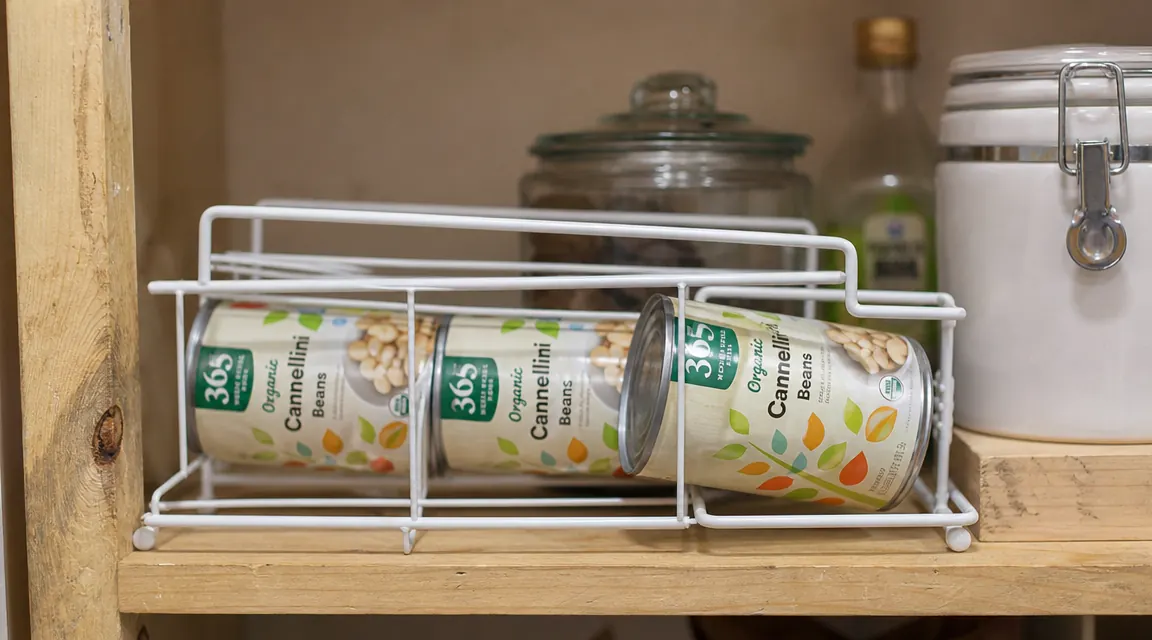
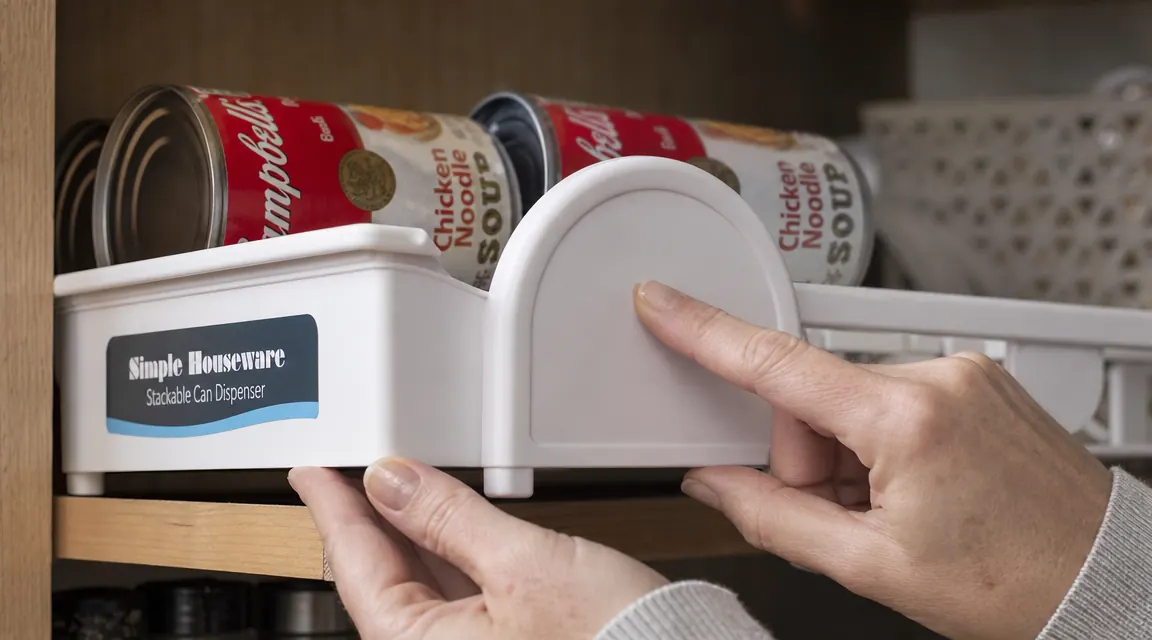
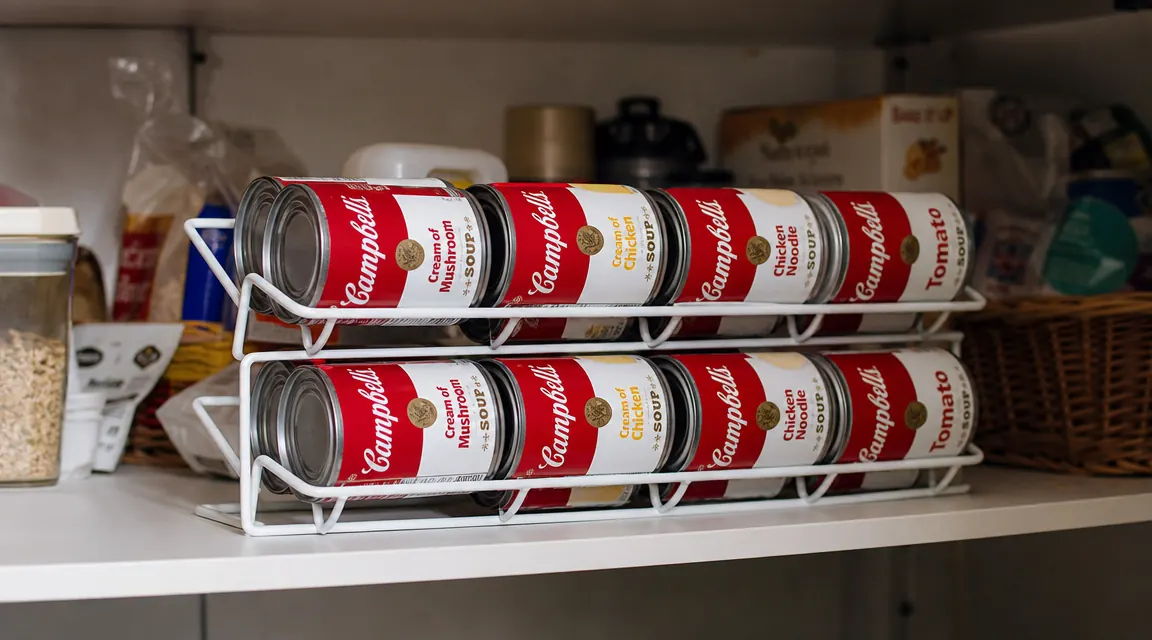
The Simple Houseware Stackable Can Dispenser Organizer is a white powder-coated wire rack. You get two in a pack. Each unit is roughly 15.7 inches long, 4.4 inches wide, and 6.1 inches tall. Cans load from the back and roll to the front via gravity. You can stack units on top of each other using the molded feet. That is the whole product. It is not complicated, which is partly why the failure modes are so easy to miss.
The Quick Verdict
A good rack for a specific set of conditions: standard-diameter cans, shelves 16 inches deep or more, and a pantry that does not mix small and large cans in the same unit. Outside those conditions, expect frustration.
Amazon Check Today's Price →Your pantry fits this rack. Your canned goods might not.
Before ordering, check your shelf depth and your most common can diameter. If both match, the Simple Houseware 2-pack is a genuinely strong buy. Check today's price on Amazon.
Amazon Check Today's Price on Amazon →How I've Used It
I have run this dispenser in a pantry with mixed can types for several months, specifically as a stress test. My intentional experiment was to load it the way most people actually shop: a mix of 15-oz soup cans, 14.5-oz vegetable cans, a few 10.75-oz condensed soup cans, and occasionally the odd 28-oz crushed tomato can when it was the only size left on the shelf. That is not the recommended use case. It is the realistic one.
I also had a conversation with my neighbor Patrice, who bought the same rack and returned it within two weeks. Her pantry is 11 inches deep. She could fit the rack on the shelf, but she could not rear-load it without pulling the unit halfway out first. That is not a design flaw so much as a fit issue that the listing does not call out clearly. I am going to call it out here.
The four problems I want to walk through are: diameter consistency requirements, tall can incompatibility, shelf depth vs. rear-loading clearance, and plastic end cap flex under full load. The stacking stability question comes after those, because it compounds the other issues.
Problem One: The Diameter Issue Is More Strict Than Listings Say
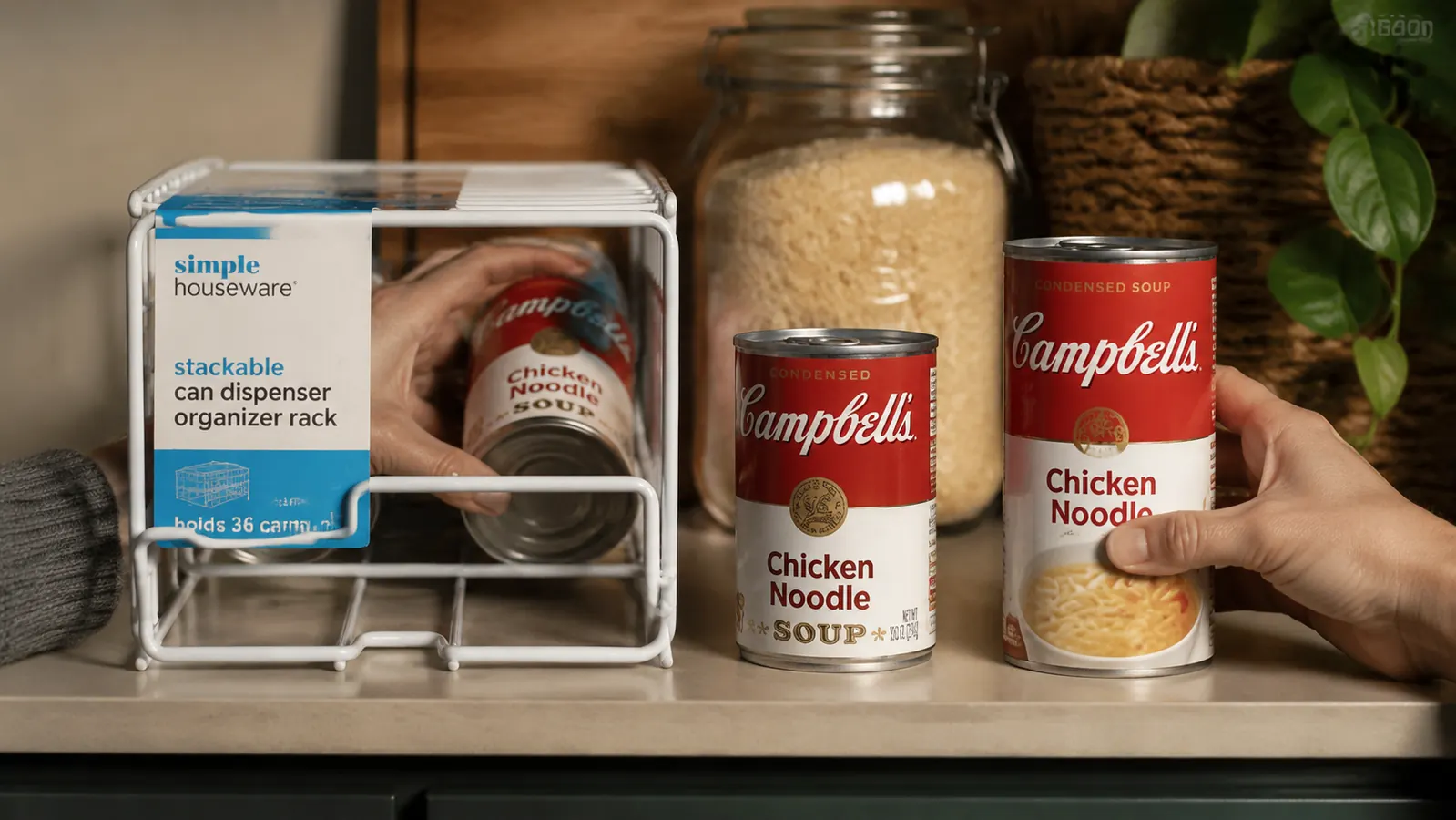
The wire rail spacing on this rack is fixed. It is set up for cans with a diameter somewhere between 2.5 and 3.1 inches. Standard 15-oz soup cans and standard 12-oz soda cans fall comfortably in that window. They roll without complaint. The problem starts when you mix in cans that sit outside that window, specifically narrower cans like 8-oz tomato paste or 10-oz cans of corn, which are skinny enough to tilt sideways mid-roll.
When a narrow can tilts sideways, it wedges diagonally across both rails and stops rolling. The can behind it hits it and stops too. Now you have a full track that has not delivered a single can to the front, and you have to reach in and manually straighten everything. This is not a catastrophic failure, but it turns a convenience product into an annoyance product, and it happens every single time you mix narrow cans with standard ones.
The fix is simple: dedicate each unit to a single can type. One unit for soup cans. One unit for sodas. Do not run a mixed pantry through the same track. The problem is that most people buying a 2-pack have a mixed pantry, and the listing photo shows a beautiful mix of different cans all rolling together. That photo is aspirational, not accurate.
Problem Two: Tall Cans Stall Before They Reach the Front
The 28-oz can issue is real and it is not covered well in most reviews. A standard 28-oz can of crushed tomatoes or whole tomatoes has a diameter around 4 inches, which is technically too wide to roll cleanly through the track. Some reviewers report that it works fine. I found it depends on the specific brand. My Great Value 28-oz cans had a very slight lip at the top and bottom that caught on the wire rails. They would roll two-thirds of the way forward and stop. Every time.
The geometry is the issue: the rail spacing is narrow enough that a slightly larger-diameter can will drag rather than roll. The more subtle problem is that tall cans also change the center of gravity in a stacked configuration. A fully loaded bottom unit with heavy 28-oz cans and a fully loaded top unit on top of it is top-heavy. I tested this and the stack was noticeably less stable than when loaded with standard 15-oz cans. More on that in a moment.
The listing photo shows a beautiful mix of different cans rolling smoothly together. That photo is aspirational, not accurate for mixed pantries.
If you exclusively buy standard 28-oz cans and nothing else, you might find a brand that fits smoothly. I would not bet a permanent pantry setup on it before testing. Buy the pack, load one unit with your specific 28-oz brand, and see if they reach the front stop within 24 hours of rear-loading. If they do not move on their own, the angle is not steep enough for that diameter.
Problem Three: Rear Loading Needs More Shelf Depth Than the Rack Itself
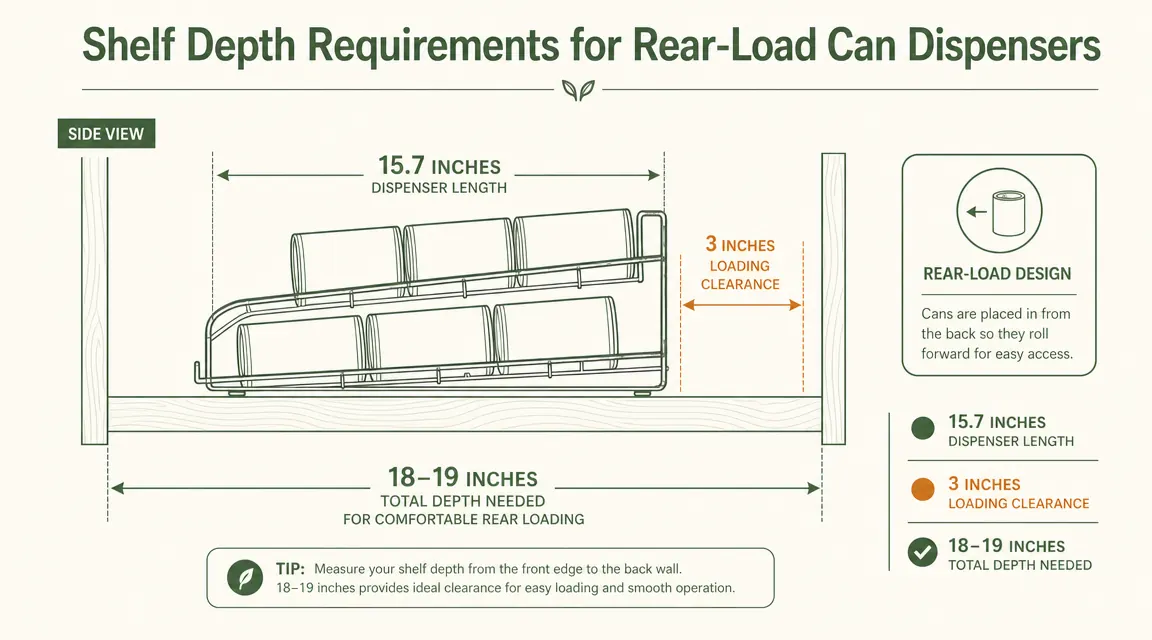
This is the one that got Patrice, and it is the most avoidable mistake in this purchase. The rack is 15.7 inches long. Standard pantry shelves in apartments and condos are often 12 to 14 inches deep. The math says the rack fits. The problem is that rear loading requires clearance behind the unit. You are not just pushing a can onto the back edge; you are tilting a can at a slight downward angle to get it over the cans already inside the track.
To load comfortably from the rear without pulling the unit forward every time, you need your shelf depth to be at least 18 to 19 inches total. That gives you the 15.7 inches for the rack plus roughly 2.5 to 3 inches of maneuvering room behind it. On a 12-inch shelf, you are basically hanging the rack off the front edge and loading it from mid-air, which means it tips backward toward the wall on every restock.
The workaround people use is to pull the rack halfway off the shelf, load from the back, then push it back into position. That works. It is also exactly what you were not supposed to need to do. If your pantry shelves are 16 inches deep or more, this is not your problem. If your shelves are 12 to 14 inches deep, test the loading motion before you fully commit to this setup over the whole shelf.
Problem Four: Plastic End Caps Flex Under Full Load
The structural frame of the rack is steel wire. That part is solid. The end caps, which are the white plastic pieces that seal both ends of the unit and serve as the feet for stacking, are not solid. They are a lightweight injection-molded plastic, and under a fully loaded rack, they flex.
This is not dangerous. It is not going to cause the unit to collapse. What it does is change the stacking behavior. When the bottom unit is fully loaded with 10 to 12 standard soup cans, the end caps splay slightly outward under the weight. The top unit, which is supposed to lock onto the bottom unit via molded notches in those end caps, sits slightly less securely when those caps are flexed versus when the unit is empty. The locking engagement is shallower, which makes the stack feel loose at the top.
I confirmed this by loading the bottom unit full, sitting the top unit on, and then gently tapping the side. The top unit rocked about a quarter inch before the notch re-engaged. With the bottom unit empty, the notch engagement was firm and did not rock. The workaround: do not run the bottom unit completely to capacity. Keep it at 8 to 9 cans instead of 11 to 12. The end caps stay closer to square, and the stacking engagement is tighter.
The Noise Problem, Which Is Real
Every time a can reaches the front stop of the track, it makes a sound. The listing does not mention this. Most reviews do not mention it either, except buried in the one-star pile. The sound is a sharp metallic tap, like someone flicking a tin can. It happens the moment gravity rolls the next can forward after you remove one. In a normal daytime kitchen, you will not notice it. At 6 a.m. when you are trying not to wake anyone up, or in a small apartment where the kitchen is 12 feet from the bedroom, you will absolutely hear it.
There is a fix that works reasonably well: cut a thin strip of felt adhesive or foam weatherstrip and attach it to the inside of the front stop bar on the rack. It dampens the impact sound from a sharp tap to a dull thud. This is a one-minute modification and it costs essentially nothing. But you should know you will want to do it before you commit the rack to a quiet corner of your home.
The noise is not constant. It only happens the moment after you take a can from the front and the next can rolls forward. If you take three cans in a row, you get three taps. If your household goes through canned goods slowly and you only pull a can every day or two, it is barely noticeable. If you have four kids and the soup cans move at a higher rate, it is more frequent.
What I Liked
- Standard 15-oz soup cans and 12-oz sodas of consistent diameter roll cleanly with zero jamming
- Assembly is tool-free, takes under ten minutes, leaves no damage to shelves
- Two-unit stacking works well when both units are loaded at moderate capacity (8-9 cans, not 12)
- FIFO rotation genuinely reduces food waste for households that buy canned goods in quantity
- The felt-strip noise fix is simple and makes the product workable in quiet spaces
Where It Falls Short
- Narrow-diameter cans (8-oz, 10-oz) tilt sideways in the track and jam when mixed with standard cans
- 28-oz cans drag rather than roll cleanly through most of the track
- Rear loading requires 18-19 inches of shelf depth for comfortable restocking; 12-inch shelves require pulling the unit forward first
- Plastic end caps flex under full 12-can loads, reducing stacking notch engagement by a noticeable margin
- The front-stop tap sound is sharp and audible in a quiet room with every can that rolls forward
Who This Is For
This rack is a strong buy if your pantry has shelves 16 inches deep or more, you stock primarily standard 15-oz soup cans or 12-oz beverages, and you tend to keep 8 to 10 cans loaded rather than pushing the unit to maximum capacity. If those three conditions match your kitchen, the failure modes in this article either do not apply to you or are easy to avoid. The rack does what it claims: cans stay organized, the oldest ones reach the front automatically, and your pantry stops looking like a pile.
It is also worth noting that at current pricing for a 2-pack, this is not a major financial risk. If you buy it, test it with your specific cans, find that your 28-oz cans stall mid-track, and return it, you are out nothing but the time to repack it. Amazon's return window gives you that flexibility. Buy it as a test, not as a permanent installation you are afraid to question.
Who Should Skip It
Skip this if you have shallow pantry shelves under 15 inches. The rear-loading friction will wear on you fast. Skip it if your pantry is a mix of many can sizes, because you will spend more time un-jamming cans than the rack saves you. Skip it if you are planning to run three units stacked, have heavy large cans, or are placing the stack on a slick laminate shelf that has nothing to stop a forward tip. And skip it if noise in the kitchen is a genuine issue in your household, unless you are ready to do the felt-strip modification immediately.
For a deeper look at how the Simple Houseware unit compares to the Sorbus can rack on a deep-shelf pantry setup, the side-by-side comparison covers both products on the same shelf under the same load conditions. If you are choosing between the two, that breakdown will save you a return. You can also check the companion piece on this product for the long-term use angle, which covers six months of daily FIFO rotation in detail.
If your cans are consistent and your shelf is deep, this rack earns its keep
The Simple Houseware 2-pack handles the right conditions reliably and assembles in under ten minutes with no tools. Check today's price and availability on Amazon.
Amazon Check Today's Price on Amazon →